Sewage Cleanup in Brooklyn, NY
☎ (929) 419-4408Tap to call our 24/7 dispatch line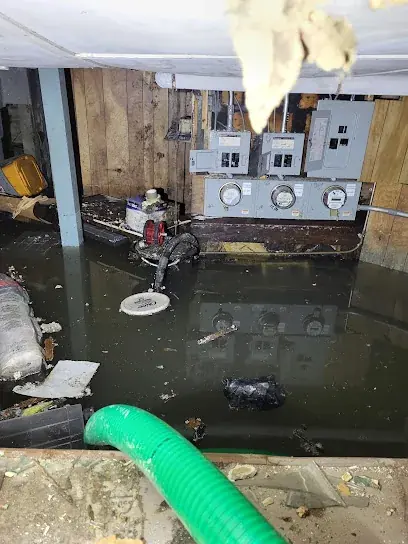
A sewage backup is never just water on the floor. Raw sewage is Category 3 black water, carrying bacteria, viruses, and human waste, so it needs a trained crew in protective gear, not a mop and a bucket. Genesis Water Restoration answers live around the clock and reaches most of Brooklyn in 30 to 60 minutes to pump it out, disinfect, and make your home safe again.
How we handle sewage in Brooklyn
Call & dispatch
A dispatcher answers 24/7 and the nearest Brooklyn crew rolls with truck-mounted pumps, air movers, and moisture meters.
On-site assessment
We trace the source and the full reach of the water, including what soaked into subfloor, plaster, and wall cavities.
Extract & dry
We pull the standing water, then run air movers and LGR dehumidifiers to a verified dry standard, not just the surface.
Verify & bill
We log moisture readings until the structure is dry, then document the loss and bill your carrier directly.
Sewage cleanup and Category 3 black water in Brooklyn
Restoration crews sort water into three categories, and sewage is Category 3, the most dangerous, often called black water. It carries raw human waste, bacteria such as E. coli, viruses, and parasites. The category decides what can be saved and what has to go:
- Porous materials the sewage soaked, drywall, carpet, pad, and insulation, cannot be disinfected and are cut out and thrown away.
- Hard, non-porous surfaces like tile, concrete, and sealed masonry are cleaned, disinfected, and saved.
- Bleach and a box fan cannot pull contaminated water out of a wall cavity or subfloor, so wiping the floor leaves the real problem in place.
Our crews seal off the affected rooms so nothing spreads, then treat every surface the sewage reached, not just the puddle you can see. Our water extraction crew pumps the black water out and our structural drying team dries the structure to a verified reading.
Sewer backup cleanup in Brooklyn
Most sewage jobs here are not a broken toilet, they are a sewer backup, where waste flows the wrong way up the lowest opening in the house, usually a cellar floor drain. Brooklyn is prone to this because about 60 percent of New York City sits on a combined sewer, one pipe carrying both sewage and street stormwater, explained on the NYC DEP page on combined sewer overflows. When heavy rain overwhelms that shared pipe, it surcharges and pushes waste backward into the lowest connected cellars.
When a backup happens, report it to 311 to put it on record. If the blockage sits in the public sewer main under the street rather than your own line, clearing it is the city's responsibility, and the NYC DEP sewer backup page covers how to report and file a claim. The lateral line from your house to the main is yours, and a clog there from roots, grease, or flushed wipes is cleared by a licensed plumber.
Sewage in your cellar? Do not wade in or try to clean it yourself. A decontamination crew heads your way, on-site across Brooklyn in 30 to 60 minutes.
☎ Call (929) 419-4408The smell comes before the water
A sewer backup almost always announces itself. If you notice a sulfur or sewage odor near a floor drain, a gurgle in the toilet when you run the sink, or drains emptying slowly all at once, stop using water in the house and call before a small backup becomes a flooded cellar.
Health risks and filing a claim
Sewage is a genuine health hazard. Contact with black water or breathing its aerosols can cause stomach illness, skin and eye infections, and breathing problems, and the risk is higher for children, older adults, and anyone with a weak immune system. Keep people and pets out until the space is decontaminated.
Once the space is extracted, disinfected, and dried, the risk drops away. Sewage that soaked into framing can feed mold within a day or two, so if it has started our mold remediation crew treats it in the same visit, and our ceiling and basement water damage team handles the whole affected area, not just the floor.
Sewage is one of the more expensive water losses, so paperwork matters. Standard homeowners policies often exclude sewer backup unless you carry a water backup rider, so check yours. Report the backup to 311, and if the blockage was in the public main you may have a claim through the NYC DEP. We document everything with dated photos and moisture logs so your claim holds up.
"Sewage came up through the floor drain in our cellar after a heavy August storm and the smell was unbearable. They showed up the same night, pumped it all out, tore out the ruined drywall, and disinfected everything. Two days later you would never have known. Careful, respectful, and they did the insurance photos for me."
Marcus D. · Prospect Lefferts Gardens
Why Brooklyn calls us first
On-site in 30 to 60 minutes
A dispatcher answers 24/7 and a crew rolls the moment you call, any hour, any Brooklyn block.
IICRC-certified crews
Trained technicians with truck-mounted pumps, air movers, and moisture meters, not a mop and a bucket.
We bill your insurer
We document the loss with photos and readings and work with your carrier directly, so the paperwork is not on you.
Deep Brooklyn knowledge
Brownstone cellars, combined sewers, flat roofs, and flood-zone blocks, we know how water moves here.
We cover every Brooklyn neighborhood
From our East Flatbush base we respond borough-wide across Kings County.
Seated in East Flatbush at 747 E 46th St, our crews cover the whole borough, day or night, and reach most homes in 30 to 60 minutes.
We serve Park Slope, Williamsburg, Bay Ridge, Bedford-Stuyvesant, Flatbush, Sheepshead Bay, Crown Heights, Bushwick, Canarsie, and every Brooklyn neighborhood.
See every neighborhood and ZIP we serve ›Related restoration services
Common questions, answered
What should I do right after a sewage backup?
Keep people and pets away from the water, do not run any more water in the house, and shut off power to the affected area only if you can reach the panel safely. Do not try to clean sewage yourself. Call (929) 419-4408 and a decontamination crew heads your way.
Can a backed-up sewer in my basement make me sick?
Yes. Black water carries bacteria, viruses, and parasites, and even breathing the aerosols can cause stomach illness, infections, and breathing problems. Children, older adults, and anyone with a weak immune system are most at risk, so stay out of the flooded area.
Is it safe to stay in the house after a sewage backup?
If the sewage is confined to a cellar you can close off, the rest of the home is usually fine to occupy while we work. If it spread across a large area or into living space, it is safest to stay out of that part of the house until it has been decontaminated and dried.
What causes sewer backup in a Brooklyn basement or cellar?
Usually a combined sewer that surcharges in heavy rain, a clogged or aging house trap, tree roots or grease in the line, or a blockage in the public main under the street. Most low cellars back up because they sit below grade with an open floor drain and no backwater valve.
Can heavy rain cause a backup even if my pipes are fine?
Yes, and it is common here. About 60 percent of the city is on a combined sewer that carries sewage and stormwater in one pipe. When rain overwhelms it, the system surcharges and pushes water back up through low cellar floor drains, with no fault in your own plumbing.
What are the early signs of a sewer backup?
A sewage or sulfur smell near a floor drain, gurgling in the toilet when you run a sink, and multiple drains emptying slowly at the same time. If you notice these, stop using water in the house and call before the backup reaches your cellar.
How do I stop sewer backup in my basement?
The most effective fix is a backwater valve, a one-way flap a licensed plumber installs in your building drain that lets waste out but shuts when the sewer tries to push water back in. Keeping the house trap clear and reporting recurring backups to 311 also help.
What gets removed and thrown out after a sewage spill?
Category 3 water cannot be disinfected out of porous materials, so soaked drywall, carpet, pad, insulation, particleboard, and cardboard have to be cut out and disposed of. Hard, non-porous surfaces like tile, concrete, and sealed masonry are cleaned, disinfected, and saved.
Does insurance or the NYC DEP cover sewage cleanup?
Standard homeowners policies often exclude sewer backup unless you carry a water or sewer backup rider, so check your policy. If the blockage was in the public main, you may have a claim through the NYC DEP after reporting it to 311. We document everything so your claim moves.
How fast can you respond, and how long does the cleanup take?
We answer live 24/7 and reach most of Brooklyn in 30 to 60 minutes. Extraction and removal of contaminated materials usually happen the same day, and drying and deodorizing typically run three to five days depending on how far the sewage spread.
How do you get the sewage smell out for good?
The smell lingers only when contaminated material stays behind, so we remove every porous item the sewage soaked, disinfect the surfaces, dry the structure fully, and then deodorize the space. Once the source is gone and the area is dry, the odor is gone with it, not just masked.
Why do old Brooklyn rowhouse cellars back up first?
Many rowhouses were built with a house trap, a U-shaped fitting that clogs with grease and debris over the decades, plus a straight line to the street and no backwater valve. Sitting below grade with an open floor drain, they give a surcharging sewer the easiest path in.
Brooklyn's water damage crew is standing by
Water sitting means damage growing. Call Genesis Water Restoration and a crew is on the way, 30 to 60 minutes out.
(929) 419-4408Tap to call, a person answers 24/7