Flood Damage Cleanup in Brooklyn, NY
☎ (929) 419-4408Tap to call our 24/7 dispatch line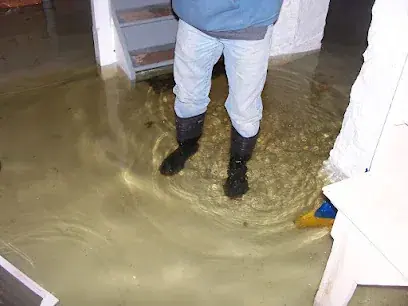
Brooklyn floods more than most of the city, and it floods the same neighborhoods again and again. Genesis Water Restoration runs 24 hour flood cleanup for the borough, from the harbor edge to the low streets along Jamaica Bay. Call and a local crew is on-site in 30 to 60 minutes to start pumping and mucking out.
How we handle flood damage cleanup in Brooklyn
Call & dispatch
A dispatcher answers 24/7 and the nearest Brooklyn crew rolls with truck-mounted pumps, air movers, and moisture meters.
On-site assessment
We trace the source and the full reach of the water, including what soaked into subfloor, plaster, and wall cavities.
Extract & dry
We pull the standing water, then run air movers and LGR dehumidifiers to a verified dry standard, not just the surface.
Verify & bill
We log moisture readings until the structure is dry, then document the loss and bill your carrier directly.
Flood damage cleanup for Brooklyn homes
Flood cleanup is not the same job as a burst pipe. Floodwater arrives dirty, carries mud and sewage, and soaks everything at floor level at once, so the work is a muck-out, a full sanitize, and a monitored dry-down, not a quick mop and a fan.
The mud is the part people underestimate. A Brooklyn flood leaves a brackish silt that settles under cabinets, behind baseboards, and inside wall cavities, exactly where mold takes hold if it is left, so a real cleanup scrapes and removes it rather than rinsing it toward a drain.
The flooding Brooklyn actually gets
Two storms rewrote the map. Hurricane Sandy pushed a record storm tide of nearly 14 feet into New York Harbor on October 29, 2012, and swamped Red Hook, Coney Island, Sea Gate, Sheepshead Bay, Gerritsen Beach, and Canarsie. On September 1, 2021, the remnants of Ida dropped more than three inches of rain in a single hour, far past what the sewers can carry, and basements across the borough flooded within minutes.
Between the headline storms, Brooklyn floods in quieter ways: high tides push into harbor-edge streets, nor'easters stack water against the coast for days, and a summer cloudburst overwhelms the combined sewers far from the water. A storm that peels back flashing lets the rain in from above, and it all ends the same way, with water on your floor.
Flood-zone neighborhoods and Category 3 water
If you live in one of these areas, flooding is a repeat risk, not a one-time event. Along Jamaica Bay, Canarsie, Bergen Beach, Mill Basin, and Marine Park sit low and drain slowly; on the harbor edge, Red Hook and Gowanus take surge and tidal water first; and the southern coast, Coney Island, Sea Gate, Brighton Beach, Manhattan Beach, Sheepshead Bay, and Gerritsen Beach, is the most exposed of all. Check your address on the FEMA Flood Map Service Center to see your zone.
Never treat a flood like a clean spill. Floodwater is Category 3 black water: it mixes street runoff, fuel, chemicals, and sewage from the overwhelmed combined system and can carry bacteria and mold spores, so contact with it, or with the air in a closed flooded space, is a real health risk. Porous material that soaked in it, like carpet, pad, the bottom of drywall, and upholstered furniture, usually has to come out. Our water extraction crew handles the pumping and our structural drying team finishes the dry-out, and the federal flood guide is worth reading before the next storm.
Flood insurance and your claim
Here is the part that catches Brooklyn homeowners off guard: a standard homeowners policy does not cover flooding from surface water or storm surge. That coverage comes from a separate NFIP flood policy or a private flood policy, while sudden internal water like a burst pipe usually falls under homeowners instead.
Whichever applies to your loss, we document it thoroughly, write the scope adjusters expect, and work with your carrier so the claim keeps moving. If the water came up through a floor drain rather than over the threshold, that is a sewer backup, and our sewage and black water cleanup crew documents that cause so the right coverage answers.
Water damage in Brooklyn does not wait. Call now and a crew is on the way.
☎ Call (929) 419-4408One storm is not the whole risk
The homes that flooded in Sandy and Ida are the ones that flood again in the next nor'easter or cloudburst. Low elevation, a combined sewer, and a below-grade cellar are a standing invitation to water. That is why we treat a flood as a recurring hazard and dry the structure completely, so the next storm does not land on damage that never fully dried out.
"When the water came up off the creek it filled the first floor before we could move anything. The crew showed up that night, pumped the house out, mucked the mud, and treated everything so it would not turn to mold. Living this close to the water, I finally feel like I have someone to call."
Desmond O. · Gerritsen Beach
Why Brooklyn calls us first
On-site in 30 to 60 minutes
A dispatcher answers 24/7 and a crew rolls the moment you call, any hour, any Brooklyn block.
IICRC-certified crews
Trained technicians with truck-mounted pumps, air movers, and moisture meters, not a mop and a bucket.
We bill your insurer
We document the loss with photos and readings and work with your carrier directly, so the paperwork is not on you.
Deep Brooklyn knowledge
Brownstone cellars, combined sewers, flat roofs, and flood-zone blocks, we know how water moves here.
We cover every Brooklyn neighborhood
From our East Flatbush base we respond borough-wide across Kings County.
Seated in East Flatbush at 747 E 46th St, our crews cover the whole borough, day or night, and reach most homes in 30 to 60 minutes.
We serve Park Slope, Williamsburg, Bay Ridge, Bedford-Stuyvesant, Flatbush, Sheepshead Bay, Crown Heights, Bushwick, Canarsie, and every Brooklyn neighborhood.
See every neighborhood and ZIP we serve ›Related restoration services
Common questions, answered
Is floodwater dangerous, and is it black water?
Yes. Floodwater is treated as Category 3 black water because it mixes street runoff, fuel, and sewage from the overwhelmed combined sewers. It can carry bacteria and should not be touched without protection, and the air in a closed flooded space is a health risk too.
Does homeowners insurance cover flooding?
Usually not. Surface flooding and storm surge are covered by a separate NFIP or private flood policy, not standard homeowners. Sudden internal water, like a burst pipe, is different and often falls under homeowners. We document the cause so the right policy answers.
Which Brooklyn neighborhoods flood the most?
The low ground along Jamaica Bay, Canarsie, Bergen Beach, Mill Basin, and Marine Park, and the coast at Coney Island, Sea Gate, Brighton Beach, Manhattan Beach, Sheepshead Bay, and Gerritsen Beach, along with the harbor edge at Red Hook and Gowanus.
Can you save flooded furniture and belongings?
Some of it. Hard, non-porous items usually clean and sanitize well. Porous items that soaked in Category 3 floodwater, like upholstered furniture, mattresses, and carpet pad, are usually safer to dispose of than to keep. We pack out and dry what can be saved.
How long does flood cleanup and drying take?
The cleanup and muck-out often take a day or two, then structural drying runs another three to five days depending on how much water came in and what got wet. A soaked cellar slab is the slowest part.
What should I do right after a flood?
Stay out of water near outlets or the panel, do not use electricity in a flooded area, and avoid contact with the water. If it is safe, photograph the damage and call (929) 419-4408. Do not try to muck out Category 3 water yourself.
Do you handle Sandy or Ida type storm-surge jobs?
Yes. Surge and tidal flooding, cloudburst sewer backups, and the large-loss cleanup that follows are exactly what our Brooklyn crews are built for, for both homes and businesses.
How much does flood cleanup cost?
It depends on the water category, the square footage, and how much material has to be removed and rebuilt. We give a clear scope up front and bill your flood or homeowners carrier directly where coverage applies. Call (929) 419-4408 for a straight answer.
Brooklyn's water damage crew is standing by
Water sitting means damage growing. Call Genesis Water Restoration and a crew is on the way, 30 to 60 minutes out.
(929) 419-4408Tap to call, a person answers 24/7